
Behind the lens
Gazi MahmudAl Maruf
Biomedical Engineer & Wildlife Photographer · Satkhira, Bangladesh
Born in Satkhira in 1982, Al Maruf spends his working life in medical technology — currently as Head of Service for the Life Science Division at OMC Limited — and the hours on either side of it in wetlands, forest edges and coastal chars with a long lens.
The two disciplines are less separate than they look. Both reward patience, careful observation and a refusal to fill gaps with guesswork.
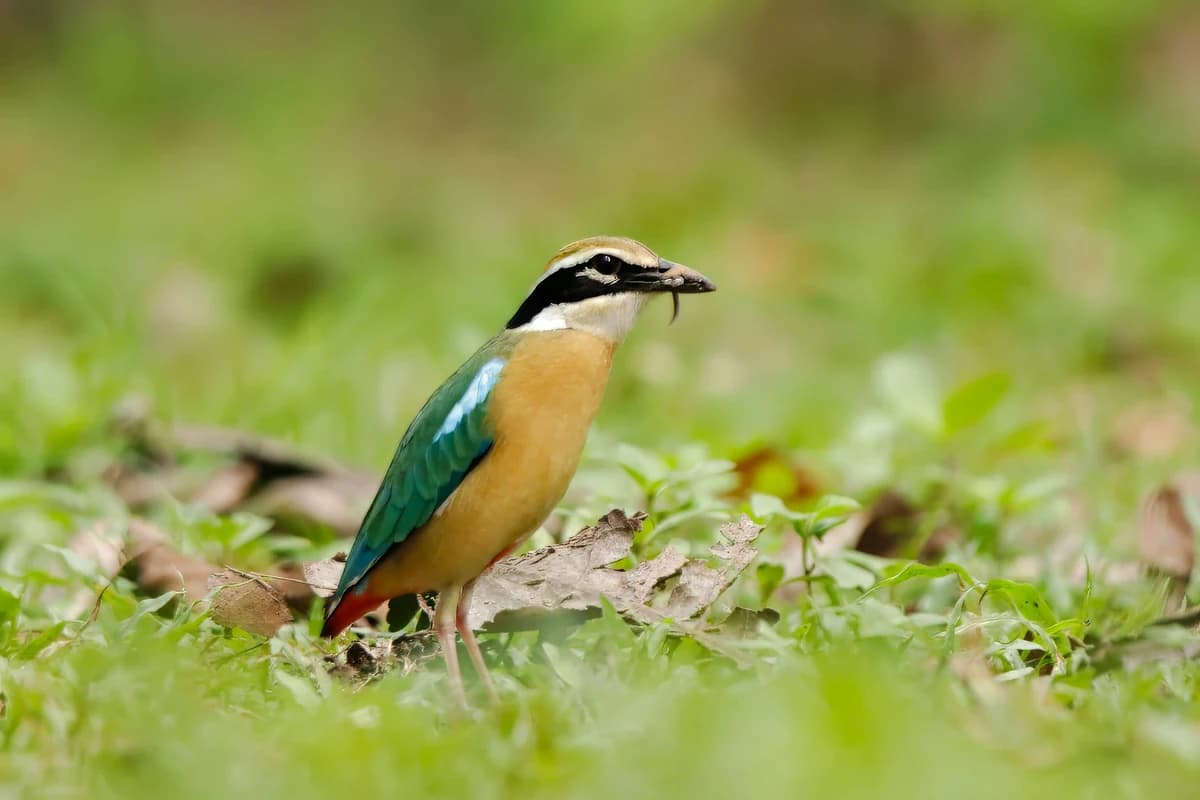
Indian Pitta
Nine colours, twenty minutes of waiting
- Bird species documented
- 373+Bird species documented
- Hours in the field
- 1,000+Hours in the field
- Years photographing wildlife
- 6+Years photographing wildlife
- Years of nature curiosity
- 40+Years of nature curiosity
The long way round
From thirty-six frames to six hundred millimetres
- School days
A first roll of film
A Yashica MF-2 Super DX and the slow discipline of thirty-six frames — learning to wait for the picture instead of hunting for it.
- 2006
Going digital
An HP Photosmart E327 replaced film. Instant feedback turned every walk into a lesson in light, distance and timing.
- 2019
Back to the field
A Nikon D3500 with a 70-300mm brought a return to serious photography, this time pointed squarely at wildlife.
- 2021
The birds take over
Dedicated bird work begins — wetlands before dawn, forest edges at dusk, and the patient accumulation of a species list.
- 2023 – 2024
Reach and resolution
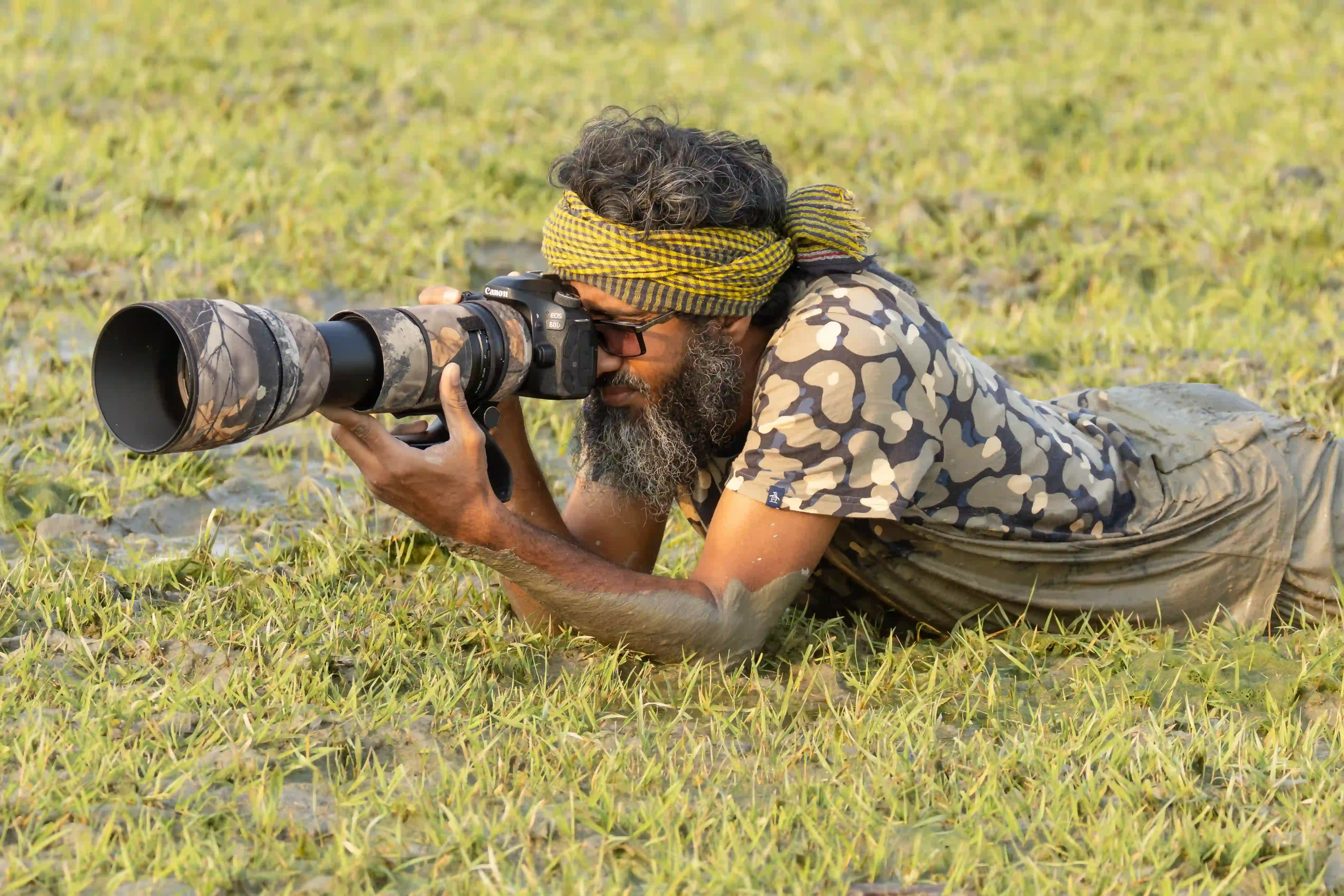
A Canon EOS 70D paired with a Tamron SP 150-600mm G2 opened up distance, letting subjects stay undisturbed at full frame.
How the work is made
Four rules that do not bend
No bait, ever
No live bait, no artificial calls, no food lures. A photograph is not worth changing an animal's behaviour for.
Distance is the technique
Long glass exists so the subject never has to know it is being watched. Nests, roosts and feeding birds are photographed from a respectful remove.
Habitat stays as found
No cut branches, no cleared perches, no trampled undergrowth. The frame is composed by moving the photographer, not the forest.
Honest images
Processing is limited to what a darkroom could do — exposure, contrast, colour. Nothing is added to a frame or taken out of it.
The kit
Cameras, in order of appearance
- Canon EOS 70DPrimary body
- Tamron SP 150-600mm G2Long telephoto
- Nikon D3500 + 70-300mmField backup
- HP Photosmart E327First digital camera
- Yashica MF-2 Super DXWhere it started
Patience is the only lens that cannot be bought.
— In the field, most mornings
Behind the scenes
Where Science Meets Wilderness
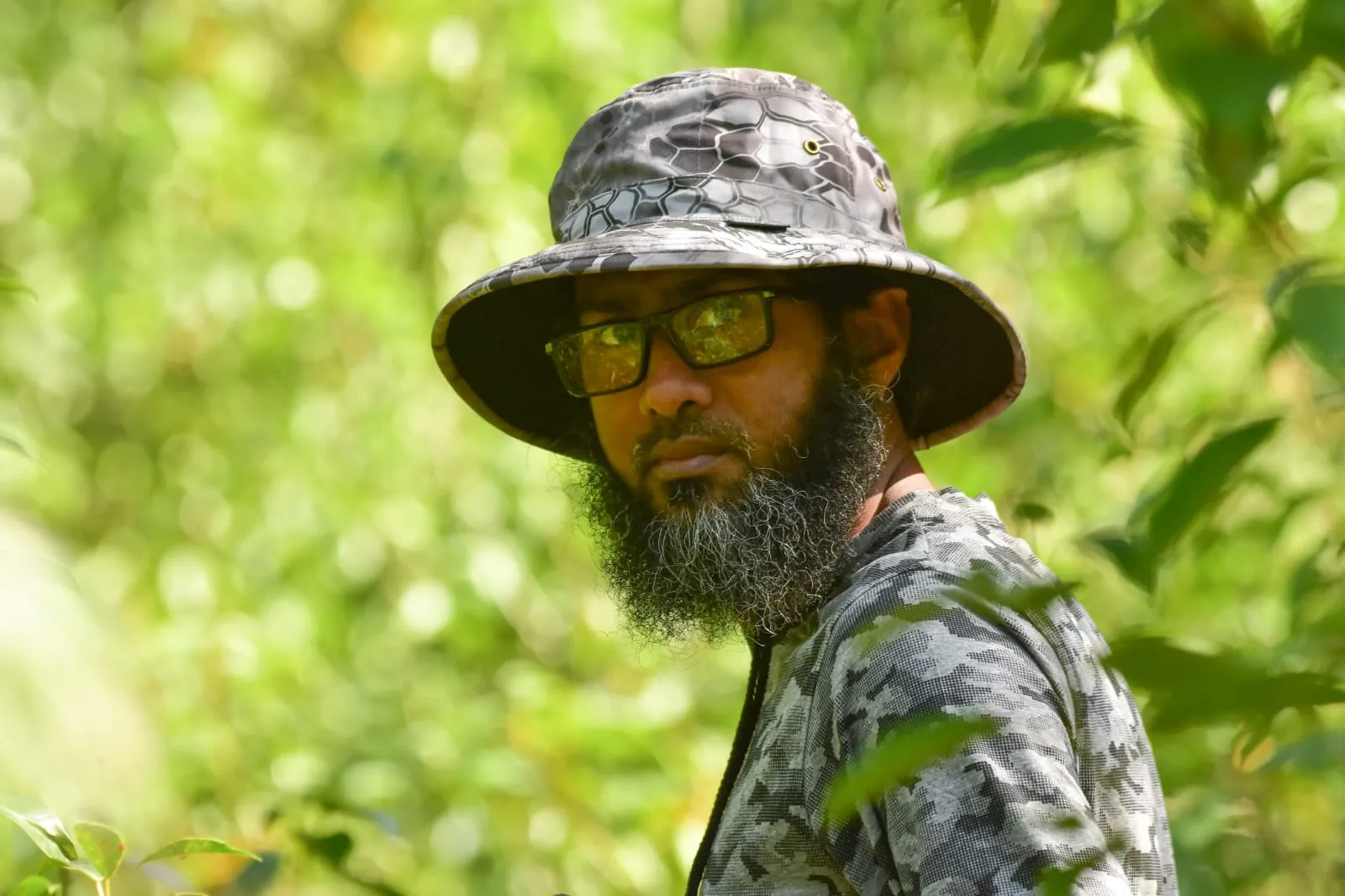
A Biomedical Engineer by profession and a passionate Wildlife Photographer at heart, Gazi Mahmud Al Maruf has successfully bridged the precision of science with the beauty of the natural world.
Born in 1982 in the beautiful district of Satkhira, Bangladesh, his fascination with drawing, wildlife and photography began during childhood. While engineering became his profession, photography remained his lifelong companion, patiently waiting for the opportunity to flourish once again.
Today, he serves as the Head of Service for the Life Science Division at OMC Limited while dedicating his weekends and expeditions to documenting Bangladesh's remarkable biodiversity through ethical wildlife photography.
From a schoolboy holding his first film camera to documenting more than 373 bird species of Bangladesh.
More than photography
Photography with Purpose
Nature has never been simply a subject for my photographs—it has always felt like home. Every journey into forests, wetlands, rivers, and open landscapes reminds me that we are not separate from nature, but an inseparable part of it.
My approach to wildlife photography is built on patience rather than pursuit. I believe the most meaningful photographs are never forced; they are quietly earned through observation, respect, and an understanding of the natural behaviour of every species I encounter.
Every image I create is intended to tell a truthful story. Whether it is the elegance of a bird in flight, the silent gaze of a wild animal, or the delicate balance of an untouched ecosystem, I want viewers to experience more than visual beauty. I hope they feel curiosity, empathy, and ultimately a responsibility toward protecting the fragile world that exists around us.
 Gazi Mahmud Al Maruf
My ethics
A Commitment Beyond Photography
Every photograph I create follows a personal code of ethics that places wildlife and nature above every image.
- 01
Respect Wildlife
Every animal deserves to remain undisturbed in its natural environment. Observation always comes before photography.
- 02
No Baiting
I never use live bait, recorded calls, or artificial attractants to manipulate wildlife behaviour.
- 03
Ethical Photography
Flash, unnecessary disturbance, and actions that may stress wildlife are never part of my workflow.
- 04
Habitat Protection
Preserving habitats is always more important than capturing a photograph.
- 05
Honest Storytelling
Every image represents a genuine encounter. Post-processing enhances quality but never changes reality.
- 06
Conservation First
My goal is not simply to create beautiful photographs, but to inspire awareness, appreciation, and conservation. <!-- ===========================================